The Bermuda Grass Battle: What Actually Happens in Winter
by:
GreenGate Turf, Pest, & Irrigation
If you’ve lived in Houston for more than a minute, you already know our winters have a personality disorder. One day it’s shorts and sunglasses, and the next day you’re wondering if you should cover your pipes. This same emotional rollercoaster is exactly what your Bermuda grass goes through each winter—and homeowners often panic when their lush, green summer lawn suddenly turns tan and crispy.
So, what’s actually happening to Bermuda grass in winter? Is it dying? Sleeping? Giving up? Plot twist: it’s doing exactly what it’s supposed to do.
Let’s break down the real story behind Bermuda in winter, what the grass experiences during cold weather, how to protect it, and how to set it up for a strong comeback in spring.
Here’s the big one: Does Bermuda grass die in the winter?
Nope. Not even close.
Bermuda is a warm-season grass, which means it grows best in hot weather. When winter hits, it naturally enters dormancy—a built-in “survival mode” where growth pauses, color fades, and the grass conserves energy in the roots.
Think of it like your lawn taking a seasonal nap.
Dormancy doesn’t mean decline—it’s just a protective mechanism. The roots remain alive and healthy underground, waiting for the warmer soil temperatures of spring.
What Bermuda Grass Looks Like in Winter
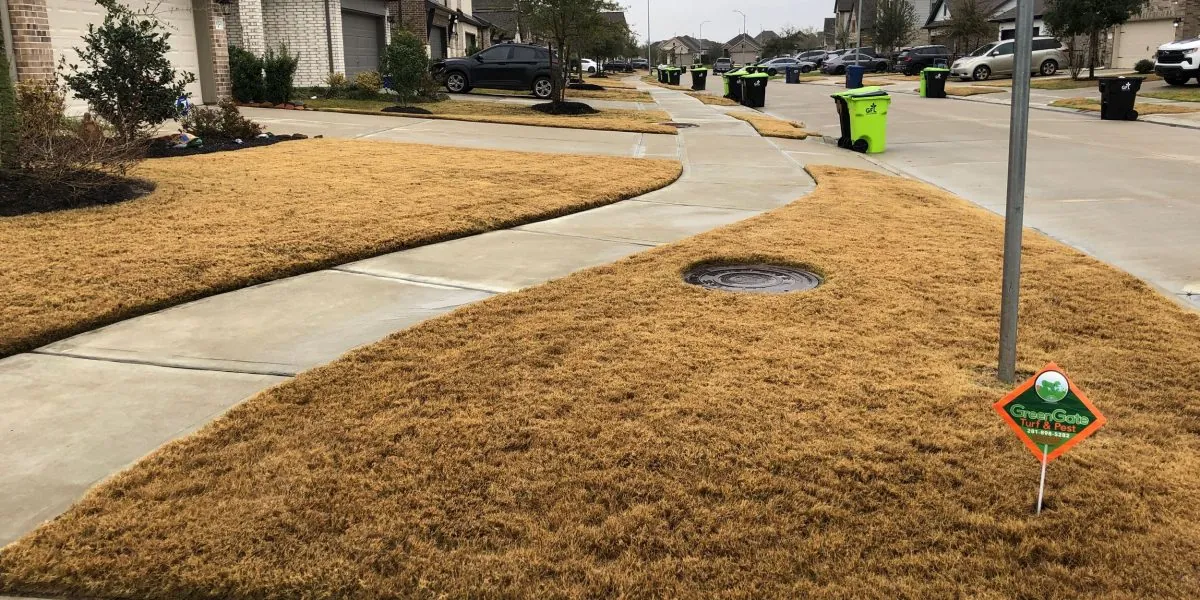
Because Bermuda is highly heat-loving, it starts slowing down as soon as soil temperatures dip below 60°F. By the time winter peaks, Bermuda grass in winter usually looks:
Tan or straw-colored
Dry and crunchy underfoot
Slow-growing or not growing at all
Patchy in shaded areas
Prone to minor thinning
This is completely normal. Bermuda’s winter appearance is basically camouflage—it’s how the grass protects itself from Bermuda winter weather swings.
If your Bermuda is turning brown during cold months, don’t panic. Unless there are visible disease patches, wet mushy areas, or unusual discolorations, your lawn is just doing its natural winter thing.
How Bermuda Grass Responds to Houston’s Winter Weather
Houston weather keeps Bermuda grass guessing. Some of the biggest winter factors include:
1. Temperature Fluctuations
Bermuda hates cold, but what really confuses it are the constant up-and-down swings—80° one week, 32° the next. These fluctuations:
Extend dormancy
Delay spring green-up
Increase stress on shallow-rooted areas
2. Cloudy, Wet Weather
Houston winters tend to be surprisingly cloudy and soggy. Bermuda doesn’t love extended wetness during dormancy and may thin out temporarily in poorly drained spots.
3. Hard Freezes
A hard freeze causes Bermuda to go fully dormant almost overnight. The grass will look “burned” afterward, but recovery in spring is normal.
4. Shade Challenges
Dormant Bermuda still hates shade. If your lawn is partially or fully shaded, expect it to look even thinner in winter.
Dormant vs. Dead Bermuda: How to Tell the Difference
A common worry among homeowners is whether their winter lawn is dormant or dead. Here’s how to tell:
Dormant Bermuda:
Uniform tan color
Firm, intact stolons when pulled
No foul smell
Soil and thatch remain somewhat firm
Dead Bermuda:
Gray, slimy patches
Bare soil in circular spots
Stolons snap easily when tugged
Mushy roots from fungal issues
If you’re ever unsure, GreenGate Turf & Pest can easily identify the cause and recommend a treatment or recovery plan.
PhotoCredit: BermudaBible
Should You Fertilize Bermuda in Winter?
Great question—and a very important one.
Winter Fertilizer for Bermuda Grass: Not What You Think
Warm-season grasses like Bermuda should not receive nitrogen fertilizer in winter. Nitrogen pushes growth, and when the grass is in dormancy, that new growth is weak, frost-sensitive, and vulnerable to disease.
But winter treatments are still important.
A winterizer fertilizer—which is typically high in potassium, not nitrogen—strengthens Bermuda’s:
Root structure
Stress tolerance
Cold hardiness
Spring green-up response
GreenGate’s winter fertilizer program is designed specifically for Gulf Coast soils and warm-season turf, giving Bermuda the support it needs without forcing unnecessary winter growth.
How to Care for Bermuda Grass During Winter
Even though Bermuda goes dormant, winter is still an important season for lawn health.
Here’s what to focus on:
1. Keep Mowing (Yes—Even in Winter)
Bermuda slows down, but it doesn’t stop growing entirely during mild spells. Keep it trimmed to maintain airflow and prevent disease. Every 3–4 weeks is usually enough.
2. Don’t Overwater
Dormant Bermuda needs very little water. Overwatering leads to root rot, fungus, and mosquito-friendly puddles.
Only water if we have a long dry spell—rare in Houston winters.
3. Stay on a Professional Weed Program
Winter is prime time for weeds because Bermuda isn’t actively growing. Without pre-emergent and targeted winter weed control, spring will show up with an unwanted party.
4. Avoid Heavy Traffic
Dormant Bermuda doesn’t repair itself until spring. Try to limit foot traffic on thin or stressed areas.
5. Clear Leaves and Winter Debris
Leaves smother Bermuda and block sunlight. Keeping the lawn clear helps prevent thinning and mold issues.
Bermuda Grass and Winter Diseases
While dormancy is protective, Bermuda is still susceptible to a few winter diseases:
Large patch (a springtime version of brown patch)
Dollar spot in mild winters
Root rot on overwatered lawns
Fungus activity from cloudy, damp conditions
Most winter lawn damage isn’t from cold—it’s from moisture and fungus. GreenGate’s lawn health program includes targeted treatments to stop these issues before they become spring headaches.
Should You Overseed Bermuda in Winter?
Some homeowners overseed with ryegrass for a green winter lawn. While it looks nice, it’s not always the best idea.
Pros:
Green color all winter
Helps with erosion
Cons:
Competes with Bermuda in spring
Delays green-up
Requires extra mowing
Needs more water
Encourages fungus
If your goal is long-term Bermuda health, overseeding isn’t recommended for most Houston lawns.
How Bermuda Recovers After Winter
Once soil temps climb back above 65°F, Bermuda wakes up. Early spring green-up varies based on:
Sun exposure
Soil compaction
Quality of winter fertilizer
Drainage
Shade levels
Weed pressure
Overall turf health
Photo Credit: The Turf Grass Group
Areas that look thin in winter can rebound quickly with proper spring care. GreenGate’s early-season fertilization and weed control are designed to wake Bermuda up gently and push healthy, uniform green-up.
How to Help Bermuda Thrive After Winter
When spring hits, here’s how to jumpstart your lawn:
Resume consistent mowing
Apply spring pre-emergents
Aerate compacted soil
Add topdressing if necessary
Begin warm-season feeding
Repair shade-stressed areas
Bermuda is tough. With the right spring program, it snaps back fast—even after a rough winter.
Winter Doesn’t Have to Beat Your Bermuda
While Bermuda grass in winter may look sad, it’s simply resting and conserving energy for spring. Dormancy is normal, healthy, and expected—especially in Houston’s unpredictable winter weather. With proper winter fertilizer for Bermuda grass, targeted weed control, and expert seasonal care, your lawn will be primed for a strong spring comeback.
If you want healthier roots, fewer weeds, and a greener, stronger Bermuda lawn year-round, contact GreenGate Turf & Pest today—we’ll take the winter guesswork off your shoulders and keep your yard looking its best.