
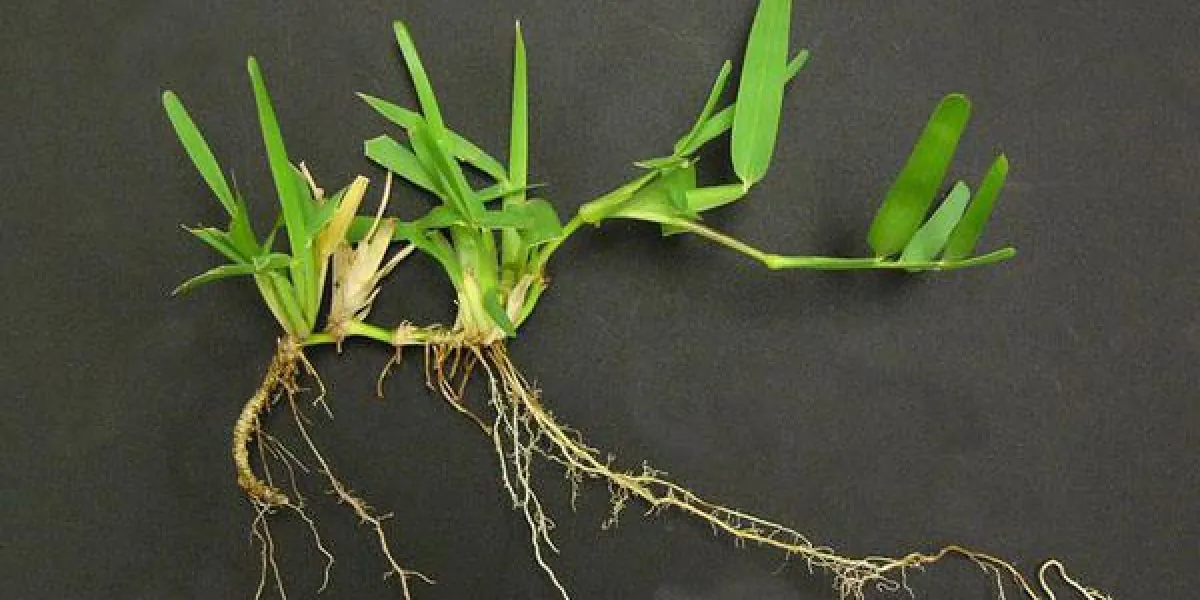
Many homeowners wonder why some lawns slowly become thicker and fuller while others struggle with thin areas or bare patches. The answer often comes down to understanding how grass grows and spreads. In warm-season lawns like Bermuda, St. Augustine, and Zoysia, the secret lies in grass runners.
These specialized growth structures allow turfgrass to expand across the soil surface and underground, gradually filling in open spaces and creating the dense lawn homeowners want. Understanding how grass runners work can also help you better manage your lawn and know what steps to take if you are trying to figure out how to grow grass in bare spots in lawn areas.
In this guide, we will break down how grass spreads, the grass growth cycle, and how the most common Texas lawn grasses naturally fill in over time.
Understanding the Grass Growth Cycle
Before discussing how runners fill in a lawn, it helps to understand the grass growth cycle. Grass develops through several grass growth stages that repeat throughout the growing season.
The typical grass growth cycle includes:
- Root development
- Leaf growth
- Lateral spreading
- Thickening and canopy formation
During active growth periods, warm-season grasses focus on producing new shoots and expanding outward. This expansion is what allows a lawn to repair thin areas and gradually cover exposed soil.
Temperature, sunlight, soil nutrients, and moisture all influence how quickly grass moves through these grass growth stages. In regions like Texas, warm-season grasses thrive during late spring and summer when temperatures are consistently warm.
How Grass Spreads Across a Lawn
Many people assume grass spreads simply by growing upward. In reality, most turfgrass varieties spread horizontally as well. This horizontal growth is what allows a lawn to gradually fill in open spaces.
Understanding how grass spreads comes down to two important structures:

Both of these structures are commonly referred to as grass runners.
Grass runners grow outward from an existing plant. As they extend across the soil, they form new nodes. Each node has the potential to develop roots and shoots, eventually becoming a new grass plant connected to the original one.
Over time, this process creates a network of grass plants that interconnect and form a dense lawn.
This natural spreading ability is why healthy lawns can recover from small damage or thinning without needing to be reseeded.
The Role of Grass Runners in Lawn Thickening
Grass runners are the primary reason warm-season lawns can repair themselves. As runners move across the soil surface or beneath it, they establish new growth points that create additional blades of grass.
This spreading process helps lawns:
- Fill in bare patches
- Increase turf density
- Crowd out weeds
- Strengthen the root system
However, grass runners need the right conditions to thrive. Poor soil, heavy weed pressure, or improper lawn care can slow or even stop this spreading process.
If your lawn is struggling with thin areas, the solution often involves improving the conditions that allow runners to grow and expand.
How Bermuda Grass Spreads
Bermuda grass is one of the most aggressive spreading turfgrasses used in residential lawns. Understanding how Bermuda grass spreads helps explain why it can quickly fill in damaged areas.
Bermuda grass spreads through both stolons and rhizomes. Stolons grow above the soil surface, creating visible runners that extend across the lawn. Rhizomes grow underground and produce new shoots that emerge from the soil.
Because Bermuda uses both spreading methods, it can establish and repair itself very quickly.
When conditions are ideal, Bermuda grass can rapidly fill in thin areas and create a thick, carpet-like lawn. This aggressive spreading habit is one reason Bermuda is commonly used on sports fields and golf courses.
However, the same trait that helps Bermuda lawns recover quickly can also make it difficult to contain when it spreads into garden beds or neighboring lawns.
St. Augustine Grass Runners
St. Augustine grass spreads differently than Bermuda. While it still relies on runners, its growth pattern is slightly less aggressive.
St Augustine grass runners grow above the soil surface through stolons. These thick runners creep across the lawn, rooting at nodes and producing new grass blades along the way.

Unlike Bermuda, St. Augustine does not spread through underground rhizomes. Instead, it depends almost entirely on its surface runners to expand.
Because of this growth habit, St. Augustine lawns can fill in bare areas, but the process may take longer if the lawn is heavily damaged.
St. Augustine grass runners are easy to spot when mowing or walking through the lawn. These runners form a network that connects the grass plants together and gradually builds a dense turf canopy.
With proper watering, fertilization, and weed control, St. Augustine lawns can steadily fill in thin areas over the course of a growing season.
How Zoysia Grass Spreads
Zoysia grass is known for creating an extremely dense lawn, but it typically spreads more slowly than Bermuda or St. Augustine.
Understanding how Zoysia grass spreads helps explain why it takes patience for this turf type to fully establish.
Zoysia spreads through both stolons and rhizomes, similar to Bermuda grass. However, its growth rate is slower, which means new areas take longer to fill in.
The benefit of this slower growth is that Zoysia often forms one of the thickest and most durable turf canopies once it becomes established. Its dense structure also helps prevent weeds from invading the lawn.
Although Zoysia may take more time to fill in open spaces, its runners eventually create a strong, tightly knit turf.

How to Grow Lawn Grass in Bare Spots
If you are wondering how to grow grass in bare spots in lawn areas, encouraging runner growth is often the key.
Warm-season grasses naturally want to spread, but certain conditions can slow them down. Improving those conditions can help the lawn repair itself more efficiently.
Here are several factors that support healthy spreading.
Proper Sunlight
Most warm-season grasses require full sunlight to thrive. Shaded areas often struggle to support strong runner growth, which can lead to thinning or bare patches.
Healthy Soil
Compacted or poor-quality soil can restrict root development and limit the ability of runners to establish new plants. Aeration and soil improvement can encourage stronger growth.
Balanced Fertilization
Providing nutrients during the active growing season supports the grass growth cycle and encourages runner development. Nitrogen, in particular, helps stimulate new growth.
Consistent Watering
Grass runners rely on adequate moisture to extend and establish new roots. Deep, consistent watering helps maintain healthy turf.
Weed Control
Weeds compete with turfgrass for nutrients, sunlight, and space. Controlling weeds allows grass runners to spread without interference.
Why Some Lawns Struggle to Fill In
Even grasses that naturally spread can struggle if lawn conditions are poor. Some common issues that prevent runners from filling in bare areas include:
- Heavy weed infestations
- Soil compaction
- Inconsistent watering
- Poor fertilization
- Insect damage
- Lawn diseases
When these problems occur, the grass growth stages slow down and the spreading process becomes much less effective.
Professional lawn care programs often focus on correcting these underlying issues so turfgrass can grow and spread naturally.
The Importance of Proper Lawn Care
A healthy lawn is constantly growing, spreading, and repairing itself. Grass runners are responsible for much of this natural recovery process in warm-season turf.
By understanding how grass spreads and how different species behave, homeowners can better support their lawns throughout the growing season.
Bermuda grass spreads quickly and aggressively, making it excellent for filling in damaged areas. St Augustine grass runners steadily creep across the lawn to build thick turf over time. Zoysia spreads more slowly but eventually creates an extremely dense lawn.
When these grasses receive proper care, their runners help the lawn fill in thin areas and maintain a healthy, uniform appearance.
Let GreenGate Turf & Pest Help Your Lawn Thrive
If your lawn has thin areas or bare spots, professional lawn care can make a big difference. At GreenGate Turf & Pest, our team understands how Bermuda, St. Augustine, and Zoysia lawns grow and spread. We design treatment programs that support the natural grass growth cycle and encourage healthy runner development.
From fertilization to weed control, our services help create the conditions your lawn needs to grow thicker and stronger throughout the season.
If you’re struggling with thin grass or bare spots, GreenGate Turf & Pest can help. Contact us today to learn how our treatments support healthy grass growth and thicker lawns.