

If you live in Houston or anywhere else across the great state of Texas, you likely know the unique dread of accidentally stepping into a hidden ant mound. The sudden, burning stings, the rapid swarms crawling up your leg, and the unsightly dirt piles ruining your carefully manicured landscaping—it is practically a rite of passage for homeowners in the South.
However, accepting their presence doesn’t mean you have to surrender your property to them. Effective fire ant control is not just about maintaining lawn aesthetics; it is about reclaiming your outdoor living spaces so your family, friends, and pets can enjoy the yard safely without fear of attack.
Let’s dive into the most comprehensive, science-backed ant pest control strategies available today, exploring everything from biological behavior to targeted treatments that actually work.
Understanding Your Enemy: Red Imported Fire Ant Identification
Before you can effectively control fire ants, you need to know exactly what you are dealing with. Proper red imported fire ant identification is the crucial first step. Originally brought to the United States from South America in the 1930s via cargo ships, these aggressive pests have found the warm, humid climate of Texas to be an absolute paradise.
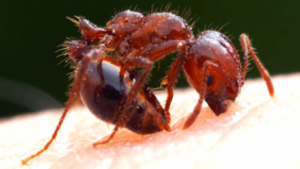
Scientifically known as Solenopsis invicta, these ants are highly aggressive, reddish-brown in color, and vary in size within a single colony—a trait known as being polymorphic. Understanding the Solenopsis invicta life cycle and behavior gives you a distinct advantage. A single mature colony can house over 250,000 worker ants and, in many Texas regions, multiple queens. When their nest is disturbed, they swarm rapidly, using their mandibles to bite and anchor onto the skin before stinging repeatedly to inject a venom rich in toxic alkaloids.
To catch a problem early, you need to recognize the signs of a fire ant infestation in yard:
- Distinctive Mounds: Fluffy, dome-shaped mounds of loose dirt that surprisingly have no visible entry or exit hole in the center. The ants enter through underground foraging tunnels.
- Post-Rain Activity: A sudden appearance of tall dirt mounds immediately following heavy Houston rainstorms, as the ants build upward to escape saturated soil.
- Aggressive Defense: Hundreds of small, reddish-brown ants pouring out of the ground within seconds if a mound is accidentally bumped or vibrated by a lawnmower.

The Gold Standard: The Two-Step Method for Fire Ant Control
When it comes to reliable, long-lasting fire ant treatment, entomologists and university extension programs across Texas highly recommend the two-step method for fire ant management. This approach is cost-effective, environmentally conscious, and highly successful at doing the one thing that truly matters: eliminating the queen in fire ant colonies. If you do not kill the queen, the colony will simply rebuild or move a few feet away.
Step 1: Broadcasting Baits Across Your Yard
The first step of this proven method involves broadcasting a slow-acting bait over your entire property. Fire ant baits consist of a chemical toxicant paired with an attractive food source, usually defatted corn grits coated in soybean oil. Foraging worker ants pick up these granules, mistaking them for food, and carry them deep into the nest to feed the queen and the brood.
Timing and weather conditions are critical here. The best time of year to bait for ants is during the milder temperatures of spring and fall. Fire ants forage most actively when the soil surface temperature is between 70°F and 90°F. Apply baits when the ground is dry, and no rain is expected for at least 48 hours, so the bait doesn’t wash away.
Homeowners frequently ask: how long does fire ant bait take to work? Because the poison is purposefully slow-acting—ensuring the worker ants don’t realize it’s lethal before they have a chance to feed the queen—it typically takes two to four weeks to see a significant reduction in the population.
For the most sustainable results, look for baits that contain insect growth regulators for long term suppression. IGRs do not kill adult ants directly; instead, they act as a form of insect birth control. They sterilize the queen and prevent the larvae from developing into adult workers, causing the colony to naturally and permanently collapse over a few weeks.
Step 2: Treat Problem Mounds Individually
After waiting about 5 to 7 days for the foragers to harvest the broadcast bait, you can move on to step two: treating the stubborn, high-traffic mounds that pose an immediate physical threat to your family or pets (such as a mound built right next to your patio or mailbox).
Understanding the application and purpose of a broadcast insecticide vs individual mound treatment is vital. Broadcast treatments are a wide-net systemic cure, while individual mound treatments are fast-acting spot fixes. For step two, you can use liquid drenches, insecticidal dusts, or fast-acting granular products directly on the mounds you need eradicated today. When applying a liquid drench, do not disturb the mound first. Pour the solution in a circular motion around the perimeter of the mound, then pour the remainder directly over the top to soak the queen deep within.
Safe and Natural Alternatives for Fire Ant Removal
Many Houston homeowners are understandably concerned about using traditional chemical pesticides, particularly around young children, playful dogs, and organic vegetable beds. Fortunately, there are several highly effective, eco-friendly, and pet safe fire ant killer options.
If you are looking for natural fire ant deterrents for gardens, you may have heard of using boiling water. While pouring three gallons of scalding water on a mound will kill a colony about 60% of the time, it is highly dangerous to carry, and it will absolutely kill the surrounding grass and plant roots.
A much safer and more reliable DIY approach is a citrus oil and soap mound drench. You can create this by mixing d-limonene (pure orange oil) with a few drops of liquid dish soap and a gallon of water. The dish soap breaks the surface tension, allowing the liquid to penetrate the soil, while the citrus oil acts as a potent natural solvent that rapidly breaks down the ants’ exoskeletons, suffocating and killing them on contact. This method is wonderfully effective for treating individual mounds tucked inside delicate garden beds.
Additionally, sprinkling food-grade diatomaceous earth (DE) around the perimeter of your garden beds acts as a great non-toxic barrier. The microscopic fossilized algae act like shattered glass to insects, physically damaging their joints and dehydrating them without introducing synthetic chemicals to your soil.
Defending Your Home: Fire Ant Prevention
Outdoor lawn management is one thing, but preventing fire ants from entering the house requires a completely different set of tactics. When extreme Texas weather hits—whether it is a prolonged summer drought or flooding spring rains—fire ants will often abandon their outdoor nests to seek shelter, water, and food indoors.
To secure your home from an indoor invasion, implement these fire ant prevention strategies:
- Seal Entry Points: Thoroughly caulk cracks around windows, exterior doors, pipe penetrations, and weep holes in your brickwork.
- Trim Vegetation: Keep tree branches and large shrubs trimmed at least a foot away from your exterior walls and roof so ants cannot use them as a living bridge to bypass your foundation treatments.
- Manage Moisture: Fire ants are drawn to water. Fix leaky outdoor faucets, repair broken sprinkler heads, and ensure your gutters drain water well away from your home’s foundation.
- Eliminate Food Sources: Do not leave dog or cat food outside overnight. Keep your indoor kitchen floors swept and free of crumbs, and store pantry items in airtight containers.
Remember, true prevention requires consistency. Actively working to control fire ants in your yard significantly reduces the pressure on your home’s exterior, making indoor pest invasions much less likely to occur.
Ouch! How to Treat Fire Ant Stings at Home
Even with the absolute best fire ant removal practices in place, accidents happen. If you or a loved one accidentally step into a hidden nest while doing yard work, the resulting stings can be incredibly distressing. They burn intensely and typically form itchy, fluid-filled white pustules within 24 hours.
Knowing exactly how to treat fire ant stings at home can provide immediate comfort and prevent secondary skin infections:
- Brush them off rapidly: Fire ants latch onto your skin with their strong jaws before stinging. You cannot simply shake your leg to get them off; you must aggressively brush them away with your hand or a towel.
- Wash the affected area: Use mild soap and cool water to clean the stings gently. This removes surface venom
- Apply a cold compress: Ice packs wrapped in a cloth will help drastically reduce local swelling and numb the painful burning sensation.
- Use topical treatments: Apply an over-the-counter hydrocortisone cream, calamine lotion, or a simple paste made of baking soda and water to alleviate the inevitable itching.
- Take an antihistamine: Oral allergy medications (like Benadryl or Zyrtec) can help reduce the body’s localized allergic reaction.

Important Note: If you or someone else experiences symptoms like shortness of breath, severe sweating, dizziness, nausea, or severe swelling beyond the sting site, seek emergency medical attention immediately. This indicates a severe systemic allergic reaction (anaphylaxis), which requires urgent medical intervention.
Professional Pest Control vs DIY Ant Removal
When faced with a severe, recurring fire ant infestation, you will eventually need to weigh the pros and cons of professional pest control vs DIY ant removal.
Going the DIY Route: For mild to moderate issues, handling the problem yourself using the two-step method is highly effective and relatively budget-friendly. Local hardware and big-box stores carry a wide variety of commercial baits and liquid drenches. If you have a standard-sized suburban property and the time to dedicate to seasonal yard maintenance, you can absolutely keep the ant population suppressed on your own.
Hiring a Professional: However, there are times when calling in the experts is undeniably the smarter move. If you have a massive multi-acre yard, a severe infestation that repeatedly threatens young children or pets, or you simply lack the time and energy to tackle the issue, professional intervention is worth the investment.
Pest control professionals have access to restricted, commercial-grade products that are often more potent and longer-lasting than off-the-shelf consumer goods. They possess specialized equipment for proper bait distribution and a deep, scientific understanding of local ant biology. A licensed exterminator can efficiently execute a customized plan tailored to your specific Houston landscape, often offering season-long warranties on their work. Furthermore, a professional can safely navigate complex chemical applications, ensuring that local groundwater and non-target beneficial insects (like bees and butterflies) remain completely unharmed.
Conclusion
Living in Houston and the broader Texas region means accepting that fire ants are a persistent part of our local ecosystem. But that doesn’t mean they have the right to dictate how you use your own property.
By correctly identifying the threat, utilizing the scientifically proven two-step method, and staying proactive with seasonal baiting, you can successfully take back your lawn. Whether you choose to mix up an eco-friendly citrus drench, apply potent insect growth regulators, or opt for the peace of mind that comes with hiring a professional pest control service, the ultimate key to success is persistence.
Do not wait until the mounds have completely taken over your landscaping. Start your prevention and treatment plan today, stay consistent with your applications, and look forward to enjoying a safe, sting-free summer in your Texas backyard!