The Weeds Houston Homeowners Will Be Fighting in Spring & What To Do Now
by:
GreenGate Turf, Pest, & Irrigation
Spring in Houston is a welcome sight—warmer temperatures, longer days, and lawns waking up from winter dormancy. Unfortunately, spring also signals the return of some of the most aggressive and frustrating spring weeds Texas homeowners deal with every year.
If you’ve ever looked out at your lawn in March or April and wondered how weeds seemed to appear overnight, you’re not alone. In reality, most Houston, Texas, spring weeds were already planning their takeover months ago. Understanding which weeds you’ll face—and why they’re so hard to control once visible—is the key to winning the battle this season.
Below, we’ll break down the most common spring weeds in Houston, explain why post-emergent-only weed control often fails, and show you what you should be doing now to protect your lawn.
Why Spring Weeds Are Such a Big Problem in Houston
Houston’s climate is practically designed for weeds to thrive. Mild winters, early warm-ups, and frequent moisture create the perfect environment for weed seeds to germinate quickly and aggressively.
Many homeowners wait until weeds appear before taking action, but by that point, the problem is already well underway. Most spring weeds begin germinating when soil temperatures reach the mid-50s to low-60s—often weeks before grass fully greens up.
That’s why spring weed control isn’t about reacting—it’s about prevention.
The Most Common Spring Weeds Houston Homeowners Face
Let’s take a closer look at the weeds that show up in Houston lawns every spring and why they’re so difficult to eliminate once established.
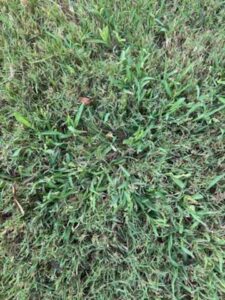
Crabgrass
Crabgrass is one of the most notorious spring weeds in Texas—and one of the hardest to fully eliminate without the right strategy.
Crabgrass is an annual grassy weed that germinates in spring, spreads aggressively through summer, and drops thousands of seeds before dying off in fall. Those seeds then sit in the soil, waiting for the next spring to repeat the cycle.
Many homeowners rely on a crabgrass killer after seeing it pop up, but post-emergent products only address the visible plants—not the seeds already waiting to germinate.
Why crabgrass is so tough:
Germinates early in spring
Spreads rapidly in thin or stressed lawns
Produces massive amounts of seed
Without a spring pre-emergent application, crabgrass will return year after year—no matter how much you spray.
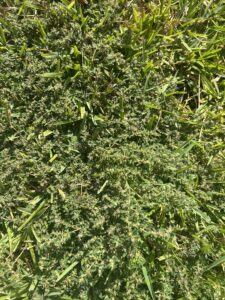
Spurge
Spurge is a low-growing, fast-spreading weed that thrives in hot, sunny areas and compacted soil. It often appears in spring and quickly forms dense mats that choke out turfgrass.
Spurge is especially frustrating because it can grow and flower at a very small size, meaning it produces seeds before many homeowners even notice it.
Why spurge is problematic:
Germinates early with warming soil
Spreads close to the ground
Reseeds quickly if not prevented
Once spurge is visible, post-emergent treatments can help—but they won’t stop the next wave of germination without a proper weed preventer in place.
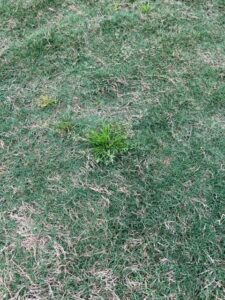
Doveweed
Doveweed has become an increasing issue in Houston-area lawns, especially in areas with poor drainage or excessive moisture. It thrives in warm, wet conditions and often goes unnoticed until it has already spread.
Dove weed is particularly tricky because it resembles healthy turf at first glance, leading many homeowners to overlook it until significant damage is done.
Why doveweed is hard to control:
Germinates late spring into early summer
Thrives in wet, compacted soils
Requires precise timing for control
Post-emergent treatments can suppress dove weed, but without addressing soil conditions and preventing future germination, it tends to return.
Poa Annua (Annual Bluegrass)
Poa annua is a cool-season grassy weed that typically germinates in fall but becomes highly visible in spring as it produces seed heads.
Many homeowners mistake poa for healthy grass—until temperatures rise and it dies off, leaving bare patches behind that invite summer weeds like crabgrass.
Why poa annua causes issues:
Weak root system
Dies in heat, thinning turf
Opens the door for summer weeds
Targeting poa requires long-term planning and strategic weed prevention—not just spring spraying.
Why Post-Emergent-Only Weed Control Fails
One of the biggest mistakes homeowners make is relying solely on post-emergent weed control. While post-emergent products are useful for killing existing weeds, they do nothing to stop new weeds from emerging.
By the time you see spring weeds, they have:
Already germinated
Established roots
Begun competing with your grass for nutrients and water
Spraying weeds after they appear is like mopping up water without fixing the leak.
Without a spring pre emergent, weed seeds remain active in the soil, ready to germinate in waves throughout the season.
What To Do Now: The Right Spring Weed Strategy
If you want a thicker, healthier lawn with fewer weeds, prevention must come first.
Apply Pre Emergent
A spring pre emergent works by creating a barrier in the soil that prevents weed seeds from successfully germinating. When applied at the right time, it can dramatically reduce weeds like crabgrass, spurge, and doveweed before they ever break the surface.
Timing is critical. In Houston, spring pre-emergent applications typically need to go down before soil temperatures consistently reach the mid-50s.
Miss that window, and weed pressure increases significantly.
Use Post-Emergent as a Support Tool
Post-emergent treatments still have a place—but they should be used strategically to control breakthrough weeds, not as your primary defense.
A balanced program uses:
Pre-emergent weed control to stop weeds before they start
Post-emergent treatments to target any weeds that slip through
Thin, stressed lawns invite spring weeds—thick lawns crowd them out.
Why Professional Weed Control Makes a Difference
Houston lawns don’t face the same weed pressures as lawns in other parts of the country. Climate, soil composition, and weed species are all region-specific, which is why cookie-cutter approaches often fail.
At GreenGate Turf & Pest, we tailor our weed control programs specifically for Houston-area lawns. Our approach focuses on:
Proper pre-emergent timing
Targeted post-emergent treatments
Lawn health improvements that reduce future weed pressure
Preventing weeds is always easier—and more cost-effective—than chasing them all season long.
Don’t Wait Until Spring Weeds Take Over
Spring weeds don’t wait—and neither should you. With weeds like crabgrass, spurge, doveweed, and poa ready to emerge, early prevention is key. GreenGate Turf & Pest helps Houston homeowners get ahead of spring weeds with targeted, professional weed control. Reach out today, and let’s keep your lawn looking its best this season.