
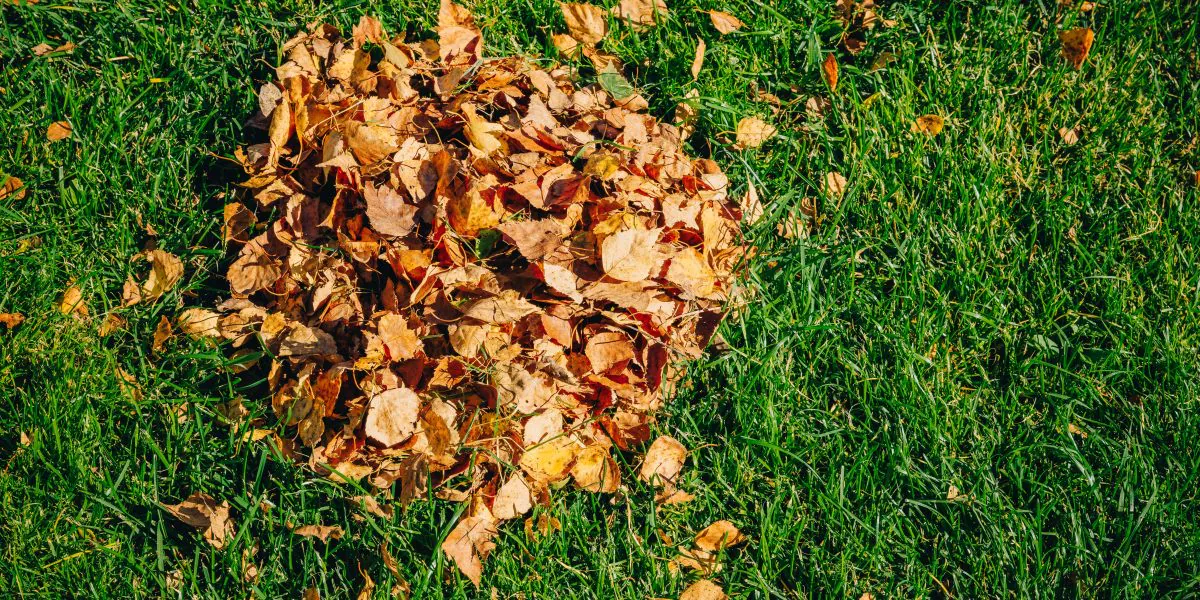
When temperatures start to cool, and trees begin dropping their leaves, homeowners face a familiar fall lawn care question: Should you mulch, bag, or blow those leaves away? The answer depends on how many leaves are covering your yard, the type of grass you have, and the overall condition of your lawn.
While a few scattered leaves usually aren’t a problem, a thick layer can block sunlight, trap moisture, and interfere with healthy grass growth. On the other hand, removing every leaf from your property may mean missing an opportunity to return valuable organic matter to the soil.
For homeowners in the Houston area, fall lawn maintenance looks a little different from it does in colder parts of the country. Warm-season grasses such as St. Augustine, Bermuda, and zoysia respond to changing temperatures in their own ways, and our mild winters can extend the growing season for some turf varieties.
Understanding the advantages of mulching leaves, bagging them, and blowing them off your lawn can help you choose the right approach for your property.
Why Fall Leaves Matter for Your Lawn
Leaves contain organic matter and nutrients that can benefit your soil as they break down. However, the way you manage them makes a difference in whether they help or hurt your grass.
A light scattering of dry leaves generally doesn’t require immediate attention. In fact, finely chopped leaves can decompose and contribute organic material to the soil. Problems arise when leaves accumulate faster than they can break down.
Thick layers of leaves can shade the grass, limit airflow, and keep the turf underneath damp. These conditions may contribute to lawn thinning and create an environment favorable to certain fungal diseases, particularly when the weather is humid.
Wet leaves can also become compacted, making them more difficult to manage. If you leave them in place for too long, you may discover yellow or thinning patches once you finally clear the area.
Regular leaf management is an important part of fall lawn care, even in a climate like Houston’s, where deciduous trees may drop leaves over an extended period rather than all at once.
Option 1: Mulching Leaves
For many homeowners, mulching is an efficient way to manage a moderate amount of fallen leaves while benefiting the lawn.
Mulching leaves involves running a lawn mower over dry leaves to chop them into small pieces. Those pieces settle between the grass blades and gradually decompose, returning organic material to the soil.
Benefits of Mulching Leaves
One of the biggest advantages of mulching is that it allows you to manage leaves without collecting and disposing of them. It can save time, reduce yard waste, and support soil health when done correctly.
Other benefits include:
- Returning organic matter to the soil: As finely chopped leaves break down, they contribute organic material that supports soil health.
- Reducing yard waste: You can often avoid filling multiple lawn bags or hauling away piles of leaves.
- Saving time: Mulching can combine mowing and leaf management into one task when conditions are appropriate.
- Supporting soil quality: Decomposing leaf material can contribute to improved soil structure over time.
Mulching is especially useful when leaves are relatively dry and spread in a thin or moderate layer across the lawn.
How to Mulch Leaves Properly
The goal is to chop the leaves into small pieces that can filter down between the grass blades rather than form a blanket over the turf.
Start by checking that the lawn isn’t excessively wet. Wet leaves tend to clump together and can clog mower decks, making it difficult to achieve an even result.
Next, mow over the leaves using a suitable mower and, if necessary, make additional passes to reduce the pieces further. Depending on the amount of leaf coverage, you may need to adjust your mowing pattern or make more than one pass.
After mowing, inspect the lawn. You should still be able to see the grass, and the chopped leaves shouldn’t form thick piles or continuous mats on the surface.
If too much material remains, collect the excess or remove some of the leaves before continuing. It’s better to remove part of a heavy leaf layer than to force all of it into the lawn.
When Is Mulching Not the Best Choice?
Mulching isn’t ideal for every situation. If your lawn is covered by a deep layer of leaves, repeatedly mowing over them may leave too much material behind.
Similarly, wet, matted leaves can be difficult to chop evenly. If the mower leaves clumps or the grass becomes buried under the debris, collect the leaves instead.
The bottom line: Mulching leaves works best when you can break them down into small pieces without smothering the grass.
Option 2: Bagging Leaves
Bagging is a practical choice when your property has heavy leaf coverage or when mulching would leave too much debris on the lawn.
Instead of allowing chopped leaves to remain on the turf, you collect them in mower bags, lawn bags, or another suitable collection system. The leaves can then be composted, used according to local yard-waste guidelines, or disposed of appropriately.
Benefits of Bagging Leaves
Bagging gives you more control over how much leaf material remains on the lawn. It’s particularly helpful for properties with large shade trees or areas that accumulate leaves quickly.
Advantages include:
- Preventing excessive leaf buildup: Collecting leaves removes material that could otherwise block sunlight and airflow.
- Improving the lawn’s appearance: A clean lawn can make the entire property look more maintained.
- Managing heavy leaf coverage: Bagging is often more effective than mulching when large quantities of leaves fall at once.
- Allowing for composting elsewhere: Collected leaves can be composted where permitted and managed properly.
Bagging can also be useful when you need to clear leaves from areas where a mower cannot operate safely or effectively.
When Should You Bag Leaves?
It’s also a good option if your lawn is already stressed or thinning and you don’t want additional debris covering vulnerable areas.
Keep in mind that bagging removes organic material that could otherwise return to the soil. However, protecting the grass from excessive leaf coverage is more important than retaining every leaf.
If you want to preserve some of the benefits, consider composting the collected leaves and using the finished compost in appropriate garden areas later.
Option 3: Blowing Leaves
Leaf blowers are useful tools for moving leaves off lawns, driveways, sidewalks, patios, and other outdoor surfaces. They can also help gather leaves into piles for collection.
However, blowing leaves isn’t always a complete solution for lawn maintenance. It moves leaves from one place to another, so you’ll still need to decide where they should go.
When Blowing Leaves Makes Sense
Blowing is particularly effective for clearing hard surfaces and gathering scattered leaves before bagging or composting them.
It can also help move leaves away from turf areas where they tend to accumulate, such as corners, fence lines, and the edges of landscaped beds.
For homeowners with several trees, a leaf blower can make routine cleanup faster, especially when leaves are relatively dry.
What to Avoid When Blowing Leaves
Avoid simply blowing leaves into large piles on the lawn and leaving them there. Those piles can trap moisture and block sunlight, potentially damaging the grass underneath.
Be mindful of where the leaves end up, too. Blowing leaves into storm drains, neighboring yards, or other areas where they create a mess can cause unnecessary problems.
Use appropriate equipment and avoid directing debris toward people, pets, vehicles, or nearby property.
Blowing works best as part of a broader leaf management plan. You can move leaves to a collection area, mulch them if conditions allow, or gather them for disposal.
What About Pine Needles on Your Lawn?
Fall cleanup isn’t always just about broad, flat leaves. If you have pine trees on your property, you may also need to manage pine needles that accumulate on your lawn.
A small amount of scattered pine needles usually isn’t a major concern, but thick accumulations can interfere with sunlight reaching the grass and create a layer of debris that is difficult to manage. Pine needles also generally break down more slowly than many soft leaves, so they may not disappear as quickly when left on the lawn.
Should You Remove Pine Needles From Grass?
If pine needles are scattered lightly across your lawn, you may not need to remove every needle immediately. However, if they begin forming a thick mat, it’s best to clear them before they interfere with healthy turf growth.
Unlike broadleaf leaves, pine needles can be more difficult to chop and distribute evenly with a standard lawn mower. Depending on the amount of debris, you may find that raking, blowing, or collecting the needles is more effective than mulching them.
How to Clean Up Pine Needles
The best method depends on where the needles have accumulated.
- Blow or rake them into piles: This works well for gathering needles from lawns, patios, and walkways.
- Collect heavy accumulations: Bagging or otherwise removing dense piles helps prevent them from sitting on the grass.
- Use them in appropriate landscape beds: Pine needles can be used as mulch in suitable garden areas, provided they’re kept away from places where they could obstruct drainage or create other maintenance issues.
You don’t necessarily need to remove every pine needle from your property. The goal is to prevent heavy buildup on the grass while managing debris in a way that suits your landscape.
As part of your fall lawn care routine, check beneath pine trees and along fence lines, where needles often collect. Regular cleanup is usually easier than waiting until a thick layer has formed.
Mulching Leaves vs. Bagging: Which Is Better?
Neither approach is automatically best for every lawn. The right choice depends on the amount of leaf coverage and how well your lawn can handle the material.
Lawn condition |
Recommended approach |
|
A light layer of dry leaves |
Mulch |
|
A moderate layer that can be finely chopped |
Mulch and inspect afterward |
|
A thick blanket of leaves |
Bag or remove excess leaves |
|
Wet, clumped leaves |
Collect when practical conditions allow |
|
Leaves covering driveways and sidewalks |
Blow or sweep, then collect |
|
Leaves accumulating repeatedly throughout fall |
Combine methods as needed |
For many Houston-area lawns, a combination of methods is the most practical solution. You might mulch leaves on open sections of the yard, blow them away from sidewalks and landscaping, and bag the heavier piles that collect under trees.
The key is to avoid leaving excessive leaf material on the grass, regardless of which method you choose.
Fall Lawn Care Tips for Houston Homeowners
Managing leaves is only one part of maintaining a healthy lawn during the fall. Seasonal weather changes, mowing practices, moisture levels, and grass type all affect how your yard responds as temperatures drop.
Adjust Your Mowing Routine
As temperatures cool, warm-season grasses generally grow more slowly. You may need to mow less frequently as growth slows, but don’t stop monitoring the lawn.
If you mulch leaves, make sure your mower can chop them finely enough without leaving heavy clumps behind. Avoid cutting the grass too short in an attempt to remove leaves more aggressively.
Maintaining an appropriate mowing height for your grass type helps protect the turf as it transitions into cooler weather.
Pay Attention to Moisture
Houston’s fall weather can bring periods of rain, humidity, and changing temperatures. Wet leaves can become heavy and compacted, so keep an eye on areas where debris tends to accumulate.
Avoid mowing excessively wet grass whenever possible. If the lawn is soggy, wait for conditions to improve before attempting a major cleanup.
Continue adjusting irrigation based on rainfall, temperatures, and your lawn’s needs. Grass may require less water as growth slows, but it can still need supplemental irrigation during dry periods.
Watch for Thinning or Discolored Grass
If you notice yellowing, thinning, or unusual brown patches after clearing leaves, don’t automatically assume the leaves are the only cause.
Excessive shade, moisture problems, pests, disease, and other lawn stressors can produce similar symptoms. Removing leaves helps eliminate one potential contributor, but persistent problems may require a closer inspection.
Keep Leaves Out of Problem Areas
Some areas of the property need more frequent attention than others. Check beneath large trees, along fences, around shrubs, and near buildings where leaves tend to collect.
Clear leaves from drains and other drainage areas to help prevent blockages. Keeping these areas free of debris can also make routine lawn maintenance easier.
Remember That Grass Types Respond Differently
St. Augustine, Bermuda, and zoysia are common warm-season grasses in the Houston area, but they don’t all have identical growth habits or maintenance requirements.
Their growth generally slows as temperatures decrease, and some lawns may begin showing seasonal color changes. Avoid assuming that every discolored area is caused by fallen leaves or that every lawn needs the same treatment.
Consistent maintenance, appropriate mowing, and timely leaf removal can help your lawn enter winter in better condition.
How Often Should You Clean Up Fall Leaves?
There isn’t one schedule that works for every property. The best frequency depends on how many trees you have, how quickly leaves accumulate, and whether your lawn is becoming covered.
For properties with heavy leaf drop, checking the yard several times a week may be necessary during peak periods. Homes with fewer trees may need attention less often.
Rather than waiting until every tree has finished dropping its leaves, monitor the lawn and remove excess coverage as it develops. This approach makes each cleanup easier and helps prevent thick layers from sitting on the grass for extended periods.
A regular fall leaf clean up can also help keep walkways clear, maintain curb appeal, and make routine mowing more manageable.
Keep Your Lawn Looking Its Best This Fall
So, should you mulch, bag, or blow fall leaves? In many cases, the answer is a combination of all three.
Mulching can return organic material to the soil when leaves are dry and coverage is manageable. Bagging is useful for heavy accumulation, while blowing makes it easier to clear hard surfaces and gather debris for collection. If you have pine trees, keeping an eye on pine needles on your lawn is another important part of seasonal cleanup.
Whatever method you choose, the goal is to keep leaves and needles from building up into a thick layer that blocks sunlight and airflow. Paying attention to debris coverage, moisture, and changing grass growth can make a noticeable difference in your lawn’s condition.
If keeping up with seasonal yard work is becoming difficult, GreenGate Turf, Pest, & Irrigation can help you maintain a neat, healthy-looking property. Our lawn maintenance services help Houston-area homeowners stay on top of routine yard care as the seasons change.