

As temperatures begin to cool, many homeowners shift their attention away from lawn care. After all, grass grows more slowly in the fall, and some warm-season grasses eventually enter dormancy during the winter. But that doesn’t mean your lawn stops needing attention. In fact, fall is an important time to prepare your grass for the challenges of the colder months ahead.
One nutrient that plays an important role in overall turf health is potassium. While nitrogen often gets the spotlight for promoting green, leafy growth, potassium works behind the scenes to support important plant functions, including water regulation, stress tolerance, and nutrient movement.
Applying the right fall lawn fertilizer can help ensure your grass has access to the nutrients it needs as the growing season winds down. But what does potassium do for grass, and why is it particularly important during fall and winter?
Let’s take a closer look at how potassium supports your lawn and why maintaining balanced grass nutrients matters throughout the year.
Understanding the Three Major Lawn Nutrients
Before discussing potassium fertilizer, it helps to understand the three primary nutrients found in most lawn fertilizers: nitrogen, phosphorus, and potassium. You’ll often see these represented by three numbers on fertilizer packaging, such as 15-5-10. These numbers indicate the percentage of each nutrient by weight.
Each nutrient serves a different purpose:
- Nitrogen (N): Supports leafy growth, green color, and overall turf development.
- Phosphorus (P): Supports root development, energy transfer, and early plant establishment.
- Potassium (K): Helps regulate water movement, supports enzyme activity, and improves the plant’s ability to handle environmental stress.
Together, these grass nutrients contribute to healthy turf. However, the ideal balance depends on your soil conditions, grass type, and the specific needs of your lawn.
During the fall, potassium deserves some attention because it helps grass maintain important physiological functions as environmental conditions change.
What Does Potassium Do for Grass?
Potassium is one of the essential nutrients grass needs to grow and function properly. Unlike nitrogen, potassium doesn’t directly promote leafy growth or produce the green color homeowners often associate with a healthy lawn. Instead, it helps grass use water and other nutrients efficiently while supporting several important internal processes.
Here are some of the primary ways potassium benefits your lawn.
1. Helps Grass Regulate Water
One of potassium’s most important functions is helping plants regulate water movement through their cells. It plays a key role in controlling the opening and closing of stomata, which are tiny pores on grass blades that regulate gas exchange and water loss.
When potassium levels are adequate, grass can manage water more effectively. This is particularly important when lawns experience changing moisture conditions, including periods of dry weather.
2. Supports Stress Tolerance
Lawns experience plenty of environmental stress throughout the year. Summer heat, drought, heavy rainfall, foot traffic, and temperature fluctuations can all affect turf health.
Potassium supports several physiological processes that help grass respond to these challenges. Maintaining adequate potassium levels can contribute to stronger, healthier turf that is better equipped to handle environmental stress.
3. Supports Root and Plant Development
Although phosphorus is more commonly associated with root development, potassium also plays an important role in overall plant growth and function.
It helps regulate enzyme activity, supports carbohydrate production and movement, and contributes to the development and maintenance of healthy plant tissue.
A lawn with balanced nutrition is better positioned to maintain healthy roots and support continued growth when conditions are favorable.
4. Helps Grass Use Other Nutrients
Grass needs more than one nutrient to thrive. Nitrogen, phosphorus, potassium, and several micronutrients work together to support plant health.
Potassium helps regulate various metabolic processes, including the movement of sugars and other compounds throughout the plant. Without sufficient potassium, grass may struggle to use available nutrients efficiently.
This is one reason balanced fertilization is so important. Applying more nitrogen doesn’t necessarily produce a healthier lawn if other essential nutrients are lacking.
Why Is Potassium Important During Fall and Winter?
Fall is a transition period for lawns, especially warm-season grasses commonly found throughout the Houston area. As temperatures decrease and daylight hours shorten, grasses such as St. Augustine, Bermuda, and zoysia naturally begin slowing their growth.
While these grasses may not need the same level of nutritional support they require during active summer growth, maintaining adequate potassium levels can still be important.
Here are a few reasons potassium deserves consideration during the cooler months.
Preparing Grass for Winter Stress
Winter conditions can be challenging for warm-season grasses. Although Houston winters are generally milder than those in northern parts of the country, lawns can still experience cold snaps, freezing temperatures, and fluctuating weather conditions.
Potassium supports the plant processes involved in stress response and water regulation. Maintaining adequate potassium levels can help grass remain physiologically healthy as it transitions toward dormancy.
It’s important to understand that potassium is not an antifreeze treatment for your lawn. It won’t prevent cold damage or guarantee that grass will survive extreme temperatures. However, correcting a potassium deficiency can help support the plant’s natural ability to handle environmental stress.
Supporting Overall Turf Health
Even when warm-season grass enters dormancy, its roots and other plant structures remain important to its long-term health.
Adequate potassium helps support normal plant functions and contributes to overall turf vigor. Maintaining balanced nutrition throughout the growing season can also help grass enter winter in better condition.
Supporting Spring Green-Up
Homeowners often focus on getting their lawns green again when spring arrives. However, healthy spring growth starts with proper lawn management throughout the previous growing season.
Maintaining appropriate nutrient levels helps support overall turf health heading into winter. While potassium alone won’t guarantee faster spring green-up, addressing nutrient deficiencies can help prevent unnecessary stress and support healthy growth when temperatures become favorable again.
Choosing the Right Fall Lawn Fertilizer
Not all fertilizers contain the same nutrient ratios, and not every lawn needs additional potassium during the fall.
When choosing a fall lawn fertilizer, it’s important to consider the existing nutrient levels in your soil rather than automatically selecting a product with the highest potassium content.
Fertilizer labels display three numbers representing nitrogen, phosphorus, and potassium. For example, a fertilizer labeled 10-0-20 contains 10% nitrogen, 0% phosphorus, and 20% potassium.
A fertilizer with a higher third number may be appropriate for a lawn with insufficient potassium, but that doesn’t mean it’s automatically the best choice for every property.
Before applying fertilizer, consider the following:
- Soil nutrient levels: A soil test can identify whether your lawn has adequate potassium or needs supplementation.
- Grass type: St. Augustine, Bermuda, and Zoysia have different growth habits and seasonal needs.
- Current lawn conditions: Grass that is actively growing may have different nutritional needs than grass preparing to enter dormancy.
- Application timing: Fertilizer applications should align with your grass type, local weather, and recommended seasonal practices.
The goal isn’t to apply as much potassium as possible. It’s to provide the nutrients your lawn actually needs.
Does Every Lawn Need Potassium Fertilizer in the Fall?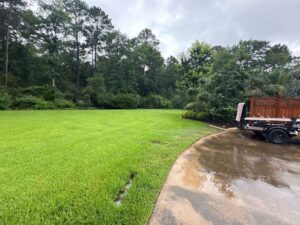
No. While potassium is essential for healthy grass, not every lawn needs an additional potassium application before winter.
Some soils naturally contain sufficient potassium to support healthy turf growth. Other lawns may have deficiencies that need to be addressed through appropriate fertilization.
Applying potassium when your soil already has adequate levels may provide little benefit. Excessive fertilizer applications can also contribute to nutrient imbalances and unnecessary environmental runoff.
The best way to determine whether your lawn needs potassium fertilizer is through soil testing.
A soil test provides valuable information about nutrient availability and soil conditions. It can help identify deficiencies and guide fertilizer selection, ensuring you’re applying the right nutrients in the right amounts.
This is especially important in the Houston area, where soil composition and drainage conditions can vary significantly between properties.
Fall and Winter Lawn Care Tips for Houston Homeowners
Potassium is only one part of maintaining a healthy lawn during the cooler months. Proper seasonal care involves several practices that work together to support turf health.
Here are a few additional things Houston homeowners should keep in mind.
1. Adjust Your Watering Schedule
As temperatures cool and grass growth slows, lawns generally need less water than they do during the summer. Overwatering during fall and winter can contribute to fungal problems and unnecessary moisture stress.
Adjust your irrigation schedule based on rainfall, soil moisture, and current weather conditions.
2. Avoid Excessive Nitrogen Applications
Warm-season grasses naturally slow down as temperatures decrease. Applying excessive nitrogen late in the growing season can encourage tender new growth when the grass should be preparing for dormancy.
A balanced fertilization program should account for seasonal growth patterns and the specific needs of your turf.
3. Keep an Eye on Lawn Diseases
Cooler temperatures and changing moisture conditions can create opportunities for certain lawn diseases. Brown patch, for example, is a common problem in St. Augustine lawns throughout the Houston area during cooler, damp weather.
Avoid overwatering, maintain appropriate mowing practices, and monitor your lawn for unusual discoloration or thinning.
4. Maintain Proper Mowing Practices
Even though grass grows more slowly during fall and winter, it may still require occasional mowing while actively growing.
Avoid cutting grass too short, and adjust mowing frequency based on growth rather than following a rigid schedule.
5. Address Nutrient Deficiencies
Fall is a good time to evaluate your lawn’s overall health and determine whether it has any nutritional deficiencies.
Soil testing can help identify imbalances and provide guidance for future fertilization applications.
Give Your Lawn the Nutrients It Needs With GreenGate Turf & Pest
Healthy lawns require more than just regular mowing and watering. They also need the right balance of essential nutrients to support growth, maintain turf health, and handle seasonal environmental stress.
Potassium plays an important role in that balance, helping grass regulate water, support normal plant functions, and respond to environmental challenges. However, the best fertilization strategy isn’t necessarily the one that applies the most nutrients. It’s the one that addresses your lawn’s specific needs.
At GreenGate Turf & Pest, we understand that Houston-area lawns face unique challenges throughout the year. From changing weather conditions to varying soil characteristics and seasonal turf diseases, maintaining healthy grass requires an approach tailored to your property.
Whether your lawn needs help correcting nutrient deficiencies or you’re looking to establish a more consistent fertilization routine, our team can help you understand what your grass needs to thrive.
Contact GreenGate Turf & Pest today to learn more about our lawn care services and give your lawn the attention it deserves throughout every season.