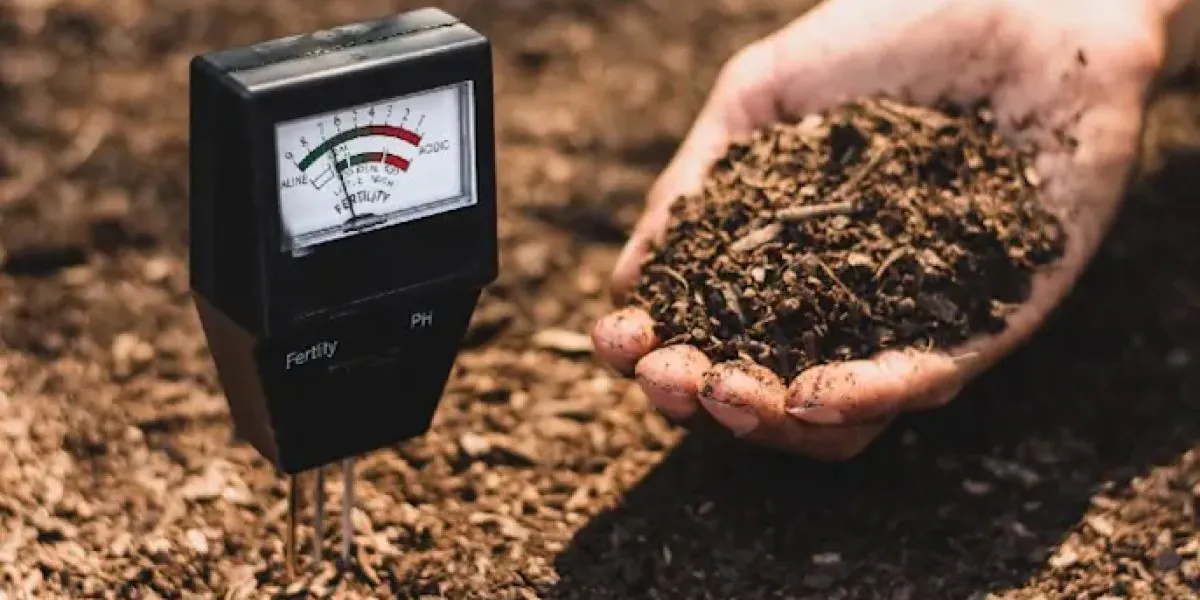
A healthy, green lawn needs more than regular mowing, watering, and fertilizer applications. It also needs the right conditions beneath the surface. Even when you’re applying quality lawn fertilizer, your grass may struggle if the soil cannot properly hold, release, or deliver the nutrients its roots need.
That’s where pH balancing and tailored nutrient management come in.
At GreenGate Turf, Pest, & Irrigation, we believe effective lawn care starts with understanding the soil. Factors such as soil pH and Cation Exchange Capacity (CEC) influence how nutrients are stored and made available to your grass. Understanding these characteristics helps us make more informed fertilization decisions and identify potential issues that could interfere with healthy turf growth.
For homeowners in Houston and Cypress, where clay-heavy soils and alkaline conditions can create challenges, understanding what’s happening beneath the grass is an important step toward a thicker, greener lawn.
What Is Soil pH and Why Does It Matter?
Soil pH measures how acidic or alkaline your soil is. It is measured on a scale from 0 to 14:
- Below 7: Acidic soil
- 7: Neutral soil
- Above 7: Alkaline soil
Soil pH plays an important role in determining how easily grass can access essential nutrients. Even when nutrients are present in the soil, an unfavorable pH can make certain nutrients less available to plant roots.
For example, highly alkaline soil can reduce the availability of micronutrients such as iron and manganese. This can contribute to yellowing, poor color, and other signs of nutrient-related stress.
On the other hand, excessively acidic soil can also interfere with nutrient availability and may increase the availability of certain elements to potentially harmful levels.
Most common warm-season turfgrasses, including St. Augustine, Bermuda, and Zoysia, generally perform well in slightly acidic to neutral soil conditions. However, the ideal range can vary depending on grass type and other soil characteristics.
Why Soil pH Can Be Challenging in Houston
Houston-area homeowners often deal with heavy clay soils and naturally alkaline conditions. These characteristics can influence how nutrients behave in the soil and how effectively grass roots can access them.
Clay soils can hold substantial amounts of certain nutrients, but they can also become compacted and restrict water movement and root development. Elevated soil pH can further complicate matters by reducing the availability of certain essential nutrients.
This is why adding more fertilizer isn’t always the answer to a struggling lawn. If the underlying soil conditions are preventing nutrient uptake, additional fertilizer may not address the actual problem.
Understanding your soil pH helps determine whether adjustments are necessary before making changes to your fertilization routine.
What Is pH Balancing?
pH balancing is the process of evaluating soil acidity or alkalinity and making appropriate adjustments to create more favorable growing conditions.
The goal isn’t necessarily to achieve a pH of exactly 7. Instead, it’s to establish a soil environment that supports healthy root development and allows grass to access the nutrients it needs.
Depending on soil test results, amendments such as lime or sulfur may be recommended to raise or lower soil pH.
However, pH adjustments should never be based on guesswork. The amount and type of amendment needed depend on existing soil conditions, soil composition, and buffering capacity.
For example, clay-heavy soils may require more amendment to change their pH than sandy soils. Applying the wrong product or excessive amounts can create additional nutrient availability problems.
A professional soil test is the best starting point for determining whether pH balancing is necessary and what adjustments may be appropriate.
What Is CEC in Soil?
When discussing soil health and nutrient management, another important measurement is Cation Exchange Capacity, commonly referred to as CEC.
If you’ve ever wondered, “what is CEC in soil?” the simplest explanation is that it measures the soil’s ability to hold and exchange certain positively charged nutrients.
Soil contains negatively charged particles that attract positively charged nutrient ions, known as cations. These nutrients can be held on soil particles and exchanged into the surrounding soil solution as plant roots absorb them.
Some important nutrients associated with CEC include:
- Calcium
- Magnesium
- Potassium
- Ammonium
Think of CEC as your soil’s nutrient storage capacity. It helps explain how well soil can retain certain nutrients and make them available to plant roots over time.
Understanding High and Low CEC
A soil’s cation exchange capacity provides valuable information about its nutrient-holding characteristics. However, a high or low CEC doesn’t automatically indicate whether soil is healthy or unhealthy.
High CEC soil:
- Has a greater capacity to hold positively charged nutrients.
- Can help keep certain nutrients available for plant roots.
- Is commonly associated with clay-rich soils and soils containing more organic matter.
- May also have compaction and drainage challenges, depending on its structure.
Low CEC soil:
- Has a smaller capacity to hold positively charged nutrients.
- May lose certain nutrients more easily through leaching.
- Is commonly associated with sandy soils.
- May require more careful nutrient application timing and management.
Understanding CEC helps lawn care professionals determine how soil characteristics may influence fertilization decisions.
It’s also important to remember that CEC is primarily a soil property. It isn’t something that can simply be corrected with a fertilizer application. Soil texture, clay mineral composition, organic matter, and pH all influence this measurement.
Why pH Balancing and CEC Matter for Lawn Fertilization
Soil pH and cation exchange capacity work together to provide a better understanding of how your lawn interacts with essential nutrients.
While CEC helps explain how well soil holds certain nutrients, pH influences how available many nutrients are to grass roots.
This distinction is important because having nutrients in the soil doesn’t necessarily mean your grass can use them.
For example, a lawn may have adequate iron in the soil but still experience iron-related yellowing because high soil pH limits iron availability. Similarly, soil with a low CEC may have difficulty retaining certain nutrients between fertilizer applications.
By evaluating both measurements, lawn care professionals can make more informed decisions about nutrient management.
Some benefits of this approach include:
1. Improved Nutrient Availability
Understanding soil pH helps identify conditions that may prevent grass from accessing essential nutrients. Correcting an identified imbalance can help create a more favorable environment for nutrient uptake.
2. More Informed Fertilization
Soil testing can identify existing nutrient levels and potential deficiencies. This helps avoid applying additional fertilizer when the real problem may be related to pH or another soil condition.
3. Better Root Development
Healthy roots are essential for absorbing water and nutrients. Addressing soil-related issues can help create better conditions for root growth and overall turf health.
4. More Efficient Lawn Care
Every lawn has different needs. Understanding soil characteristics allows fertilization decisions to be based on actual conditions rather than assuming every property requires the same treatment.
The Importance of Lawn Soil Testing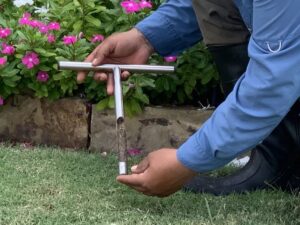
Professional lawn soil testing provides information that can’t be determined simply by looking at your lawn. Although yellowing, thinning, and poor growth can indicate a problem, those symptoms don’t always reveal the underlying cause.
A soil analysis can provide valuable information about:
- Soil pH and acidity or alkalinity.
- Cation Exchange Capacity (CEC).
- Existing nutrient levels.
- Potential nutrient deficiencies or excesses.
- Soil characteristics that may influence fertilization decisions.
This information helps determine whether your lawn needs additional nutrients, soil amendments, or adjustments to its existing fertilization program.
For homeowners dealing with persistent lawn problems, soil testing can be especially helpful. Instead of repeatedly treating visible symptoms, you can begin investigating the conditions contributing to the problem.
At GreenGate, we include a professional soil test at no additional cost for customers enrolled in our 8-step fertilization program. We evaluate important soil characteristics, including pH and CEC, to better understand the conditions affecting your lawn.

How GreenGate Approaches Tailored Nutrient and pH Balancing
At GreenGate Turf, Pest, & Irrigation, we believe successful Houston lawn care requires more than simply applying fertilizer on a predetermined schedule.
Our approach begins with understanding your lawn’s needs.
Through our soil-testing process, we evaluate important characteristics such as soil pH and CEC. These measurements help us understand how your soil holds and delivers nutrients and whether certain conditions could interfere with nutrient availability.
We then use this information alongside our comprehensive 8-step fertilization program, which provides nutrients throughout the year to support healthy turf.
When soil testing identifies an issue that warrants additional attention, appropriate recommendations may include:
Soil pH adjustments: Depending on test results, amendments such as lime or sulfur may be considered to help correct overly acidic or alkaline conditions.
Targeted nutrient applications: If testing identifies a nutrient deficiency, an appropriate nutrient treatment may help address it.
Organic matter improvements: Where appropriate, increasing organic matter can improve certain soil characteristics, including nutrient-holding capacity, water retention, and soil structure.
Ongoing soil evaluation: Monitoring soil conditions over time helps determine whether previous adjustments have been effective and whether additional changes are needed.
Our goal is to help create the conditions your grass needs to thrive while making the most of your lawn care investment.
Frequently Asked Questions About Soil pH and CEC
How often should I have my lawn’s soil tested?
Soil testing frequency depends on your soil conditions, grass type, and lawn care goals. For many established lawns, testing every few years is sufficient. However, lawns experiencing persistent problems or undergoing significant soil adjustments may benefit from more frequent testing.
Can fertilizer correct an improper soil pH?
Fertilizer supplies nutrients, but it doesn’t necessarily correct an underlying pH imbalance. Some fertilizers can influence soil pH over time, but significant adjustments may require specific soil amendments. A soil test helps determine the appropriate approach.
Does a high CEC mean my soil is healthier?
Not necessarily. A high cation exchange capacity means soil has a greater ability to hold certain positively charged nutrients. However, it doesn’t guarantee that those nutrients are present in the correct amounts or readily available to grass roots. Soil structure, drainage, pH, and nutrient levels also matter.
Can I improve my lawn without adding more fertilizer?
Absolutely. More fertilizer isn’t always the solution to a struggling lawn. Addressing soil pH, improving drainage, reducing compaction, and correcting other underlying problems can all contribute to better turf health.
Why is pH balancing important for Houston lawns?
Houston-area soils can present challenges related to clay content, drainage, compaction, and alkaline conditions. Elevated soil pH can also reduce the availability of certain nutrients. Testing helps identify these characteristics and determine whether adjustments are necessary.
What is the difference between soil pH and CEC?
Soil pH measures how acidic or alkaline soil is, while CEC measures its ability to hold and exchange positively charged nutrients. Both measurements help explain how soil supports grass growth, but they provide different types of information.
Give Your Lawn the Right Foundation for Growth
A beautiful lawn starts beneath the surface. Even the best fertilization program can struggle to deliver the desired results when soil conditions interfere with nutrient availability.
That’s why pH balancing and tailored nutrient management are important parts of a comprehensive lawn care strategy. By understanding soil pH, cation exchange capacity, and other important soil characteristics, you can make more informed decisions about what your lawn needs.
At GreenGate Turf, Pest, & Irrigation, we take the guesswork out of fertilization by starting with a professional soil test. Our 8-step fertilization program is designed with Houston-area lawns in mind, helping homeowners work toward greener, thicker, healthier turf.
Ready to give your lawn the attention it deserves? Contact GreenGate today to learn more about our lawn fertilization program and how we can help your grass thrive.