
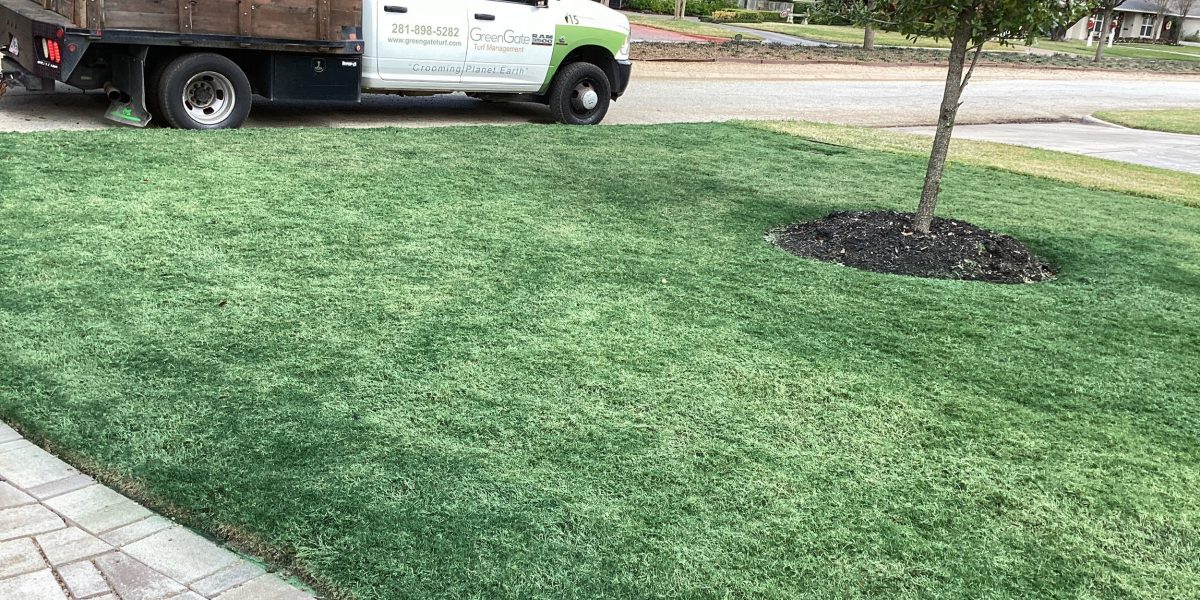
When cooler temperatures arrive in the Houston area, homeowners may notice their lawns losing some of their vibrant green color. Warm-season grasses such as St. Augustine and Bermuda naturally slow their growth and may enter dormancy as temperatures drop. While this is a normal part of the seasonal cycle, not everyone loves the brown or faded appearance that can come with it.
Fortunately, there are ways to maintain a greener-looking lawn throughout the winter. Two popular options are ryegrass overseeding and lawn paint, also known as lawn pigmentation. Both can improve the appearance of your yard, but they work in very different ways.
If you’re considering overseeding grass or applying a lawn colorant, it’s important to understand what each option involves, how much maintenance it requires, and how it affects your existing turf. Let’s compare the two approaches and explore which may be the better choice for your Houston-area lawn.
Why Do Lawns Lose Their Green Color in Winter?
Before comparing ryegrass and lawn paint, it helps to understand why warm-season lawns change color during colder months.
St. Augustine, Bermuda, and zoysia are warm-season grasses. They grow most actively during spring and summer when temperatures are consistently warm. As temperatures drop in fall and winter, their growth slows. Depending on the grass variety, weather conditions, and overall turf health, the lawn may become lighter green, turn brown, or enter dormancy.
Dormancy is a natural survival mechanism. Rather than continuing to put energy into aboveground growth, the grass conserves resources until more favorable growing conditions return.
In the Houston area, winters are generally milder than in many other parts of the country. However, occasional cold fronts and freezing temperatures can still affect turf color and growth. Some lawns may remain partially green throughout winter, while others experience more noticeable browning.
For homeowners who prefer a consistently green appearance, ryegrass and lawn pigmentation offer two different ways to improve winter lawn color.
What Is Ryegrass Overseeding? 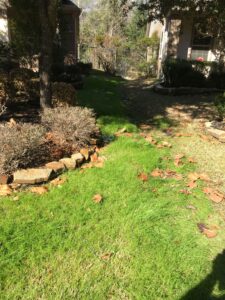
Ryegrass overseeding involves spreading ryegrass seed over an existing lawn to establish temporary cool-season grass. Unlike St. Augustine and Bermuda, which slow down during colder weather, ryegrass thrives in cooler temperatures.
Annual ryegrass is commonly used for winter overseeding because it germinates relatively quickly and provides green coverage during the cooler months.
The process generally involves:
- Preparing the existing lawn by mowing it to an appropriate height and removing excess debris.
- Spreading ryegrass seed evenly across the lawn.
- Watering regularly to keep the seedbed moist during germination and establishment.
- Maintaining the new grass with appropriate mowing and watering as it grows.
Once established, ryegrass can provide a lush, green appearance while the underlying warm-season grass is dormant or growing slowly.
Benefits of Ryegrass Overseeding
Ryegrass offers several advantages for homeowners who want a green lawn during winter.
- Living grass: Unlike lawn paint, ryegrass is real, growing grass that provides natural coverage.
- Improved winter appearance: It can create a consistently green lawn when warm-season turf begins to lose its color.
- Temporary coverage: It can fill in areas that may otherwise look thin or brown during dormancy.
- Seasonal interest: Homeowners who enjoy maintaining their lawns year-round may appreciate having an actively growing lawn during winter.
Potential Drawbacks of Ryegrass
Although overseeding can produce attractive results, it also comes with additional responsibilities.
- Increased maintenance: Ryegrass requires watering, mowing, and attention throughout the winter growing season.
- Competition for resources: If not managed properly, ryegrass can compete with the existing warm-season grass for water, nutrients, and sunlight.
- Spring transition: As temperatures rise, ryegrass begins to decline. If it remains actively growing too long, it can compete with the warm-season lawn as it comes out of dormancy.
- Additional expense: Seed, preparation, installation, and ongoing maintenance can add to the overall cost of winter lawn care.
Overseeding can be a good option for homeowners who want temporary living grass during winter and are comfortable with the additional maintenance it requires. However, it isn’t necessarily the best choice for every Houston-area lawn.
What Is Lawn Paint or Lawn Pigmentation? 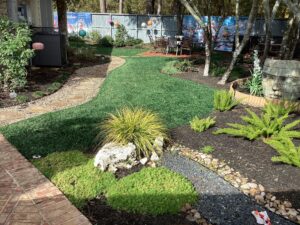
Lawn paint, often called lawn pigment or grass colorant, is a product designed to improve the appearance of existing grass by adding green color to the blades. Rather than introducing new grass seed, pigmentation coats the existing turf to create a greener appearance.
Professional lawn pigmentation products are formulated specifically for turf and are different from ordinary household paint. They are typically applied using specialized spraying equipment to distribute the color evenly across the lawn.
Lawn pigmentation can be particularly useful for warm-season grasses such as St. Augustine, Bermuda, and zoysia that naturally lose some of their green color during winter dormancy.
The application process generally involves:
- Evaluating the lawn to determine its current condition and color.
- Preparing the turf by mowing and removing excessive debris when appropriate.
- Mixing the lawn colorant according to the manufacturer’s instructions.
- Applying the pigment evenly across the grass blades.
- Allowing the product to dry according to the recommended application guidelines.
Once applied and dry, lawn pigment gives the existing grass a greener appearance without requiring new grass to germinate and grow.
Benefits of Lawn Pigmentation
For homeowners who want a greener-looking lawn without introducing another type of grass, lawn paint offers several advantages.
- Immediate visual improvement: Unlike ryegrass, which needs time to germinate and establish, lawn pigmentation can improve lawn color as soon as the product is applied and dries.
- Less maintenance: Pigmentation doesn’t create new grass that needs to be mowed or maintained.
- No additional grass competition: Because no new grass is introduced, there is no competition between ryegrass and the existing warm-season turf.
- Preserves the existing lawn: Lawn pigment changes the appearance of the grass without changing the underlying grass variety.
- Seasonal flexibility: It can be applied when appropriate to improve the appearance of dormant or partially dormant turf.
Potential Drawbacks of Lawn Paint
Although lawn pigmentation is a convenient option, there are a few considerations homeowners should keep in mind.
- It doesn’t create new growth: Lawn paint only changes the appearance of existing grass. It won’t fill bare spots, repair damaged turf, or improve the lawn’s underlying health.
- Color may fade: Rainfall, mowing, foot traffic, and other environmental conditions can gradually affect the appearance and longevity of the pigment.
- Application matters: Uneven application can result in inconsistent coloring or an unnatural appearance.
- It isn’t a substitute for lawn care: Pigmentation won’t correct underlying issues such as poor irrigation, nutrient deficiencies, disease, or pest damage.
Lawn pigmentation is best viewed as a cosmetic treatment rather than a lawn repair solution. A healthy lawn is still important, even when the goal is simply to improve its winter appearance.
Ryegrass vs. Lawn Paint: What’s the Difference?
Both options can help homeowners maintain a greener-looking lawn during winter, but the biggest difference is that one introduces living grass while the other changes the color of the existing turf.
Here’s a closer look at how they compare.
|
Comparison |
Ryegrass Overseeding |
Lawn Paint |
|
How it works |
Introduces new grass seed |
Adds color to existing grass |
|
Results |
Requires germination and establishment |
Visible after application and drying |
|
Maintenance |
Requires watering and mowing |
Minimal additional maintenance |
|
Grass competition |
Possible competition with existing turf |
No additional grass competition |
|
Lawn growth |
Produces actively growing grass |
Does not produce new growth |
|
Spring transition |
Requires management as temperatures rise |
No ryegrass transition necessary |
|
Bare spot repair |
May provide temporary coverage where conditions allow |
Does not fill bare spots |
|
Primary purpose |
Establish temporary winter grass |
Improve the appearance of existing turf |
For homeowners primarily interested in maintaining winter color, lawn pigmentation may be the simpler option. Ryegrass may be more appealing to those who specifically want living cool-season grass and don’t mind the additional maintenance.
Which Option Is Better for Houston-Area Lawns?
Houston’s climate creates some unique considerations when deciding between ryegrass and lawn paint.
Unlike homeowners in colder climates, Houston residents generally have warm-season lawns that experience a relatively short winter dormancy period. St. Augustine and Bermuda are especially common throughout the area, and both naturally respond to cooler temperatures by slowing their growth.
Considerations for St. Augustine Grass
St. Augustine is a warm-season grass that can lose much of its green color during colder weather. Its growth slows significantly as temperatures drop, and freezing conditions can cause additional discoloration.
Overseeding St. Augustine with ryegrass is not recommended. Ryegrass can compete with St. Augustine for resources, and managing the transition back to active St. Augustine growth in spring is important.
Lawn pigmentation offers an alternative for homeowners who want to maintain a green appearance without introducing another grass variety.
Considerations for Bermuda Grass
Bermuda grass typically enters dormancy during winter, often turning brown as temperatures decrease. This can make the contrast between dormant turf and surrounding landscaping especially noticeable.
Ryegrass is sometimes used to maintain green coverage over dormant Bermuda lawns. However, the additional grass requires maintenance and must be managed as temperatures rise.
For homeowners who don’t want to manage a second grass variety, lawn pigmentation can provide a greener appearance without changing the lawn’s natural seasonal cycle.
What About Zoysia?
Zoysia is a warm-season grass that naturally slows its growth and may turn brown or become dormant during colder months. While ryegrass overseeding is an option for some warm-season lawns, it is generally not recommended for zoysia. Introducing ryegrass can create unnecessary competition for resources and complicate the transition back to active zoysia growth in spring.
For homeowners who want to maintain a greener appearance throughout winter, lawn pigmentation is a better alternative. It improves the color of existing zoysia without introducing another grass variety or interfering with its natural seasonal growth cycle.
How to Decide Which Option Is Right for Your Lawn
Choosing between ryegrass and lawn paint ultimately comes down to what you want your lawn to look like during winter and how much maintenance you’re willing to take on.
Here are a few questions to consider:
1. Do you want living grass or simply a greener appearance?
If you enjoy having actively growing grass throughout winter, ryegrass may be worth considering. If your primary goal is to improve the color of your existing lawn, pigmentation may be a better fit.
2. How much maintenance are you willing to do?
Ryegrass requires regular watering, mowing, and monitoring. Lawn pigmentation generally requires much less ongoing maintenance, making it appealing to homeowners who want a greener lawn without adding another seasonal maintenance routine.
3. Are you concerned about your lawn’s spring transition?
Introducing ryegrass means you’ll need to manage the transition back to your warm-season grass as temperatures increase. Pigmentation avoids this additional consideration because it doesn’t introduce another grass variety.
4. What condition is your existing lawn in?
Neither option is a replacement for proper lawn care. If your lawn has significant bare spots, disease, insect damage, or irrigation problems, those issues should be addressed rather than simply covering them with seed or pigment.
A lawn care professional can help evaluate your turf and determine which approach makes the most sense for your property.
Why Winter Lawn Care Still Matters
Regardless of whether you choose ryegrass or lawn pigmentation, winter is not a time to completely forget about your lawn.
Although warm-season grasses grow more slowly during colder months, they still benefit from appropriate seasonal care. Maintaining good lawn health throughout winter can help your grass recover when warmer weather returns.
A few important winter lawn care practices include:
- Monitor irrigation: Adjust your watering schedule as temperatures and rainfall change. Avoid overwatering, especially when temperatures are cool and grass isn’t actively growing.
- Watch for lawn fungus: Cool, damp conditions can create favorable conditions for certain turf diseases, including brown patch in susceptible warm-season lawns.
- Manage fallen leaves: Excessive leaf coverage can block sunlight and trap moisture against the grass.
- Monitor lawn pests: Keep an eye out for unusual discoloration or turf damage that could indicate insect activity.
- Avoid unnecessary fertilization: Fertilizer applications should be based on grass type, seasonal timing, and actual turf needs. Applying NPK fertilizers when warm-season grass is dormant or approaching dormancy can be counterproductive.
Remember, a brown winter lawn isn’t necessarily an unhealthy lawn. Dormancy is a natural process, and maintaining the health of your existing turf should remain the priority.
Should You Hire Professional Lawn Care Services?
If you’re unsure whether ryegrass overseeding or lawn pigmentation is the right choice, professional guidance can help you avoid unnecessary expenses and potential problems.
Professional lawn care services can help identify your grass variety, evaluate the condition of your turf, and recommend seasonal maintenance practices that support long-term lawn health.
When researching lawn care near me, look for a company that understands the unique challenges of maintaining warm-season grasses in the Houston area. Local knowledge matters because soil conditions, rainfall patterns, humidity, and temperature fluctuations all influence how your lawn responds to seasonal changes.
At GreenGate Turf, Pest, & Irrigation, we understand that every lawn has different needs. From seasonal lawn maintenance to fertilization, weed control, and irrigation considerations, our goal is to help homeowners maintain healthy, attractive lawns throughout the year.
Keep Your Lawn Looking Its Best This Winter
Ryegrass overseeding and lawn pigmentation are two different approaches to achieving a greener winter lawn. Ryegrass introduces temporary living grass that requires additional watering and mowing, while lawn paint improves the color of your existing turf without introducing new growth.
For Houston-area homeowners with St. Augustine, Bermuda, or zoysia lawns, understanding these differences can help you make an informed decision. Whether you prefer the appearance of actively growing ryegrass or the convenience of lawn pigmentation, the most important thing is to choose an approach that works with your existing lawn and its seasonal needs.
Not sure what your lawn needs this winter? GreenGate Turf, Pest, & Irrigation is here to help. Contact our team to learn more about our lawn care services and discover how we can help keep your yard healthy and looking its best throughout the year!