
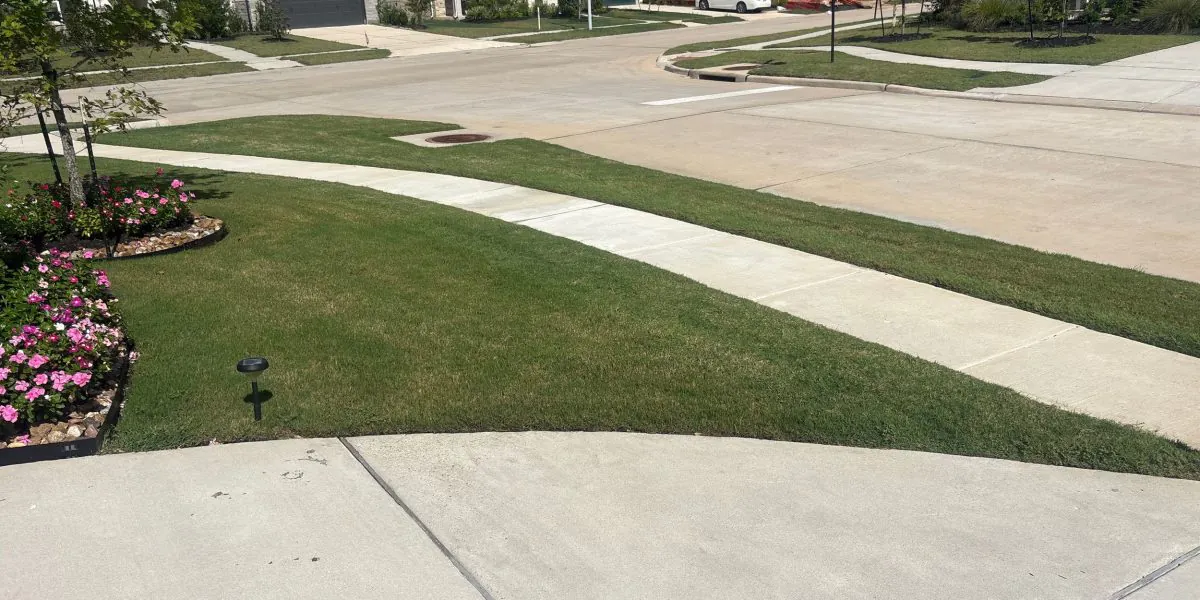
When Houston temperatures climb, your lawn can go from healthy and green to dry and stressed surprisingly quickly. Even if your sprinkler system runs on schedule, your grass may still not be getting the water it needs.
That can leave homeowners wondering, “why is my lawn turning brown?” While heat and drought stress are common causes, the problem may not be the weather alone. Your irrigation system could be struggling to keep up.
Sprinkler system problems can become much more noticeable during periods of extreme heat. A clogged nozzle, low pressure on sprinkler heads, incorrect controller settings, or a broken component can prevent water from reaching parts of your lawn. By the time you notice large brown areas, the underlying irrigation issue may have been developing for weeks.
Understanding the warning signs can help you catch problems earlier and keep your lawn healthier throughout the hottest months.
Why Houston Heat Puts Your Sprinkler System to the Test
Houston summers can be tough on lawns. High temperatures increase the amount of moisture grass loses through evaporation

and transpiration. Your lawn may need consistent, thorough watering simply to maintain adequate moisture in the soil.
A properly functioning irrigation system should distribute water evenly across the lawn. However, irrigation systems don’t always perform exactly as they should.
Sprinkler heads can become damaged. Nozzles can become clogged or broken. Water pressure can change. A controller may have outdated settings. Landscaping and growing plants can also interfere with sprinkler coverage.
During mild weather, you might not notice these problems. Your lawn may have enough natural rainfall or cooler temperatures to compensate. Once the heat arrives, however, small irrigation problems can quickly turn into visible lawn stress.
Signs Your Sprinkler System Isn’t Keeping Up
If you notice changes in your lawn during hot weather, take a closer look at what your sprinkler system is actually doing.
1. You Have Dry Spots That Keep Coming Back
One of the most obvious signs of irrigation problems is a dry lawn with specific areas that repeatedly turn brown.
If one section of the yard looks significantly worse than the surrounding grass, the problem may be uneven irrigation rather than a lawn-wide lack of water.
Pay attention to the shape and location of the dry spots. If they consistently appear in the same areas, check whether the sprinkler heads in that zone are spraying correctly.
A sprinkler head may not be reaching far enough, or a nozzle may be clogged or damaged. Sometimes a head can also be blocked by vegetation, landscaping, or other objects.
2. Your Sprinkler Heads Have Low Pressure
Low pressure on sprinkler heads can significantly affect irrigation coverage.
A sprinkler head that normally produces a strong, consistent spray may begin producing a weak stream or a spray that doesn’t extend as far as it should. When that happens, areas around the perimeter of the sprinkler’s coverage may not receive enough water.
Low pressure can have several potential causes, including plumbing issues, damaged components, clogged nozzles, or problems elsewhere in the irrigation system.
If several sprinkler heads suddenly have weak coverage, the issue may be more extensive than a single damaged head.
3. You Find Broken or Damaged Nozzles
Broken nozzles are another common reason irrigation systems don’t distribute water correctly.
A nozzle controls the direction and pattern of water coming from a sprinkler head. If it is cracked, damaged, missing, or clogged, water may spray in an unintended direction or fail to cover the area it was designed to reach.
Sometimes the problem is obvious. Other times, a nozzle may appear to be functioning while still providing poor coverage.
This is one reason visually checking your sprinkler system while it is running can be valuable. Walk through the lawn and watch the spray patterns. Look for areas that are being missed, excessive misting, water spraying onto sidewalks, or heads that aren’t popping up correctly.
4. Your Lawn Is Brown Even Though the Sprinklers Are Running
This is one of the most frustrating situations for homeowners.
You know the system is turning on. You can hear the sprinklers running. Yet your lawn continues to decline.
So, why is my lawn turning brown?
The answer isn’t always simply “it needs more water.” If your sprinkler system isn’t distributing water evenly, increasing the watering time may not solve the problem.
For example, if a sprinkler head is broken or has low pressure, running the system for twice as long doesn’t necessarily get water into the dry area. Instead, other areas may receive excessive water while the problem area remains dry.
Before simply adding more watering time, it’s important to determine whether the system is actually delivering water where it needs to go.
Your Controller Settings Could Be Part of the Problem
Your irrigation controller determines when and how long your system operates. During the hottest part of the year, controller settings deserve a closer look.
Seasonal changes can affect how frequently and how long your lawn needs irrigation. A schedule that worked well during spring may not provide adequate coverage during periods of intense summer heat.
At the same time, simply increasing the schedule isn’t always the best solution.
Your controller should be programmed based on your landscape, grass type, soil conditions, irrigation system, and current weather conditions. Overwatering can create its own problems, while underwatering can contribute to a heat stressed lawn.
It’s also worth checking whether a controller has accidentally been changed. Power interruptions, programming errors, seasonal adjustments, or other changes can alter the irrigation schedule without being immediately obvious to a homeowner.

A Heat Stressed Lawn Isn’t Always an Irrigation Problem
It’s important to remember that irrigation isn’t the only factor affecting your lawn during extreme heat.
Even a properly functioning sprinkler system can’t eliminate all signs of heat stress.
A heat stressed lawn may show signs such as wilting, discoloration, slower growth, or areas that appear thinner than usual. Soil type, grass type, mowing practices, foot traffic, pests, disease, and environmental conditions can all affect how your lawn responds to high temperatures.
That’s why diagnosing the cause matters.
If your entire lawn is showing signs of stress, the issue may be related to weather conditions and overall watering needs. If isolated areas repeatedly become dry while the rest of the lawn looks healthy, an irrigation problem may be more likely.
Why Annual Irrigation Inspections Matter
One of the best ways to prevent irrigation problems from becoming major lawn problems is through regular inspections.
Annual inspections matter because irrigation systems are exposed to the elements year-round. Sprinkler heads can be damaged by lawn equipment, vehicles, pets, landscaping work, or normal wear and tear. Nozzles can become clogged. Pipes and connections can develop leaks. Water pressure can change.
An inspection provides an opportunity to identify these issues before they become obvious through widespread lawn damage.
A professional irrigation inspection can include checking sprinkler heads, spray patterns, nozzles, zones, controller settings, water pressure, and overall system coverage.
It’s particularly helpful to have the system evaluated before periods of extreme summer heat. Catching a small problem early can be much easier than trying to diagnose an irrigation issue after your lawn has already developed extensive dry areas.
Don’t Automatically Blame the Heat
When Houston lawns begin turning brown in the summer, it’s easy to assume the temperature is entirely responsible.
Heat absolutely puts additional stress on turf, but it can also expose weaknesses that were already present in your irrigation system.
Think of extreme heat as a stress test.
A sprinkler system with a partially clogged nozzle might appear to work adequately during cooler weather. Once temperatures rise and the lawn’s water demand increases, that same irrigation problem can become much more noticeable.
The result may be a dry lawn, brown patches, or areas of turf that simply don’t look as healthy as they did earlier in the season.
What Homeowners Can Check
If you suspect sprinkler system problems, there are a few things you can observe yourself.
Run your irrigation system and walk through each zone. Look for:
- Sprinkler heads that don’t pop up
- Weak or inconsistent spray
- Low pressure on sprinkler heads
- Broken nozzles
- Water spraying onto sidewalks or driveways
- Heads that are blocked by vegetation
- Areas that aren’t receiving water
- Leaking sprinkler heads
- Zones that don’t activate
- Controller settings that don’t match your current watering needs
You don’t necessarily need to diagnose the entire irrigation system yourself. In fact, trying to make random adjustments can sometimes make the situation more difficult to troubleshoot.
The goal is simply to identify anything that doesn’t look right so it can be evaluated.
Keep Your Lawn Watered Before Problems Get Worse
Your irrigation system plays an important role in helping your lawn withstand Houston’s hottest weather. But a sprinkler system can only do its job if its components are working correctly and the water is being distributed where it’s needed.
If you notice dry spots, brown areas, weak sprinkler coverage, broken nozzles, or other unusual changes, don’t assume the heat is the only culprit.
A properly maintained irrigation system can help provide more consistent coverage and reduce the risk of localized dry areas during stressful weather.
And if you’re asking yourself, “why is my lawn turning brown?” it’s worth looking at the irrigation system before simply increasing the watering schedule.
At GreenGate Turf & Pest, we understand that keeping a Houston lawn healthy takes more than simply turning on the sprinklers. From irrigation concerns to lawn care and pest management, our team can help identify potential problems and determine what your lawn needs to stay healthy through the Texas heat.
Ready to find out whether your sprinkler system is keeping up with the heat? Contact GreenGate Turf & Pest today to schedule an irrigation inspection and give your lawn the attention it needs.